
"large seed"
5000 article(s) found

Types and varieties of coffee
Coffee is a plant belonging to the genus Coffea in the Rubiaceae family. According to Chevalier (1947), the genus Coffea is divided into four groups with 66 species, including 24 species in Eucoffea group, 18 species in Mascarocoffea group, 13 species in Paracoffea group and 11 species in Argocoffea group
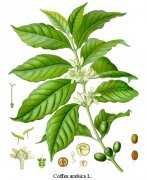
Coffee cultivation techniques detailed explanation of planting knowledge of Coffee trees
Coffee, cocoa and tea are called the three major beverages in the world, and their output, consumption and output value all rank first. In addition to being used as a beverage, coffee can also extract caffeine and coffee oil; in medicine, it can be used as an anesthetic, stimulant and diuretic cardiotonic agent. Coffee pulp can be used to make wine, vinegar, pectin and molasses; dried pulp can be used as animal feed; dried fruit shell can be used as fertilizer and burning
Common sense method of Coffee invents the Frozen Storage method of small Fruit Coffee Seeds
The French Development Institute has recently successfully invented a method of long-term frozen storage of small fruit coffee seeds, which provides a reliable means for establishing a small fruit coffee seed bank and protecting biodiversity. Coffee belongs to Rubiaceae evergreen shrubs or small trees, mainly produced in tropical areas, there are small fruit coffee, medium fruit coffee and large fruit coffee and so on. Small fruit coffee is native to the Arab region and is currently grown in the world.

General knowledge of Frozen Storage of small Fruit Coffee seed
The French Development Institute has recently successfully invented a method of long-term frozen storage of small fruit coffee seeds, which provides a reliable means for establishing a small fruit coffee seed bank and protecting biodiversity. Coffee belongs to Rubiaceae evergreen shrubs or small trees, mainly produced in tropical areas, there are small fruit coffee, medium fruit coffee and large fruit coffee and so on. Small fruit coffee is native to the Arab region and is currently grown in the world.
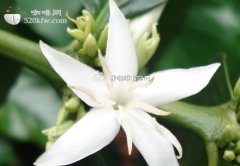
Coffee plants
Coffee plants: several to dozens of flowers are clustered in the axils of leaves, and the second to fifth flowers are planted on a flower axis. The flowers are white and fragrant. The petals of medium and small seed species are generally 5, and the petals of large seed species are 7-8. Flowers tubular, Terete. The number of stamens is the same as the number of petals, stamen stigma bifid, ovary inferior, generally 2-loculed, but also 1-loculed or 3-loculed. Insect-borne flowers, large-grain species and small-grain seeds

Yunnan coffee bean planting area, Yunnan coffee bean introduction
Following Cafe (official Wechat account vdailycom) found that the western and southern parts of Yunnan Province are located between 15 N and the Tropic of Cancer. Most areas are between 1000 m and 2000 m above sea level. The topography is mainly mountainous and sloping, with large undulation, fertile soil, sufficient sunshine, abundant rainfall and great temperature difference between day and night. These unique natural conditions have formed.

Description of taste and flavor of Yunnan small-grain coffee
How to brew small grains of coffee in Yunnan to describe the taste and flavor of manors in producing areas 1. Sexual reproduction is a breeding method to obtain a large number of seedlings at one time, first of all, seed selection and seed treatment. Improved varieties are the basis for cultivating strong seedlings and increasing per unit yield. good varieties must be carefully selected, on the mother tree of coffee, the selection is completely mature, the fruit shape is normal, full and full, the size is the same, with two seeds.

Fresh style of literature and art: SEED seed coffee
This store is in Changjiahui, a small one. The appearance looks like a retro van, the store has a large number of camera models and other retro elements, full of literary and artistic freshness. American coffee is only 19 yuan a cup, the rest are also more than 20 yuan, although cheap, but the taste is not bad, the entrance is not sour, lips and teeth stay fragrant. This soda costs 28 yuan a bottle, which is a little small by comparison.

A brief introduction to the characteristics of Yunnan small-grain Coffee planting Technology Brand and Flavor description
Although the environmental problems of coffee cultivation can reach the standard of hot areas, they are far away from the equator, evaporation, large-scale coffee cultivation in Yunnan is less than 1100m above sea level, the severe drought in Yunnan in recent years, and the frost period in the producing areas, and so on, all make coffee planting can not be guaranteed normally, which directly affects the quality of coffee production. As for other processing problems, not to mention the quality of farmers, tea

Where is Yunnan small seed coffee mainly produced?
The western and southern parts of Yunnan Province are located between 15 N and the Tropic of Cancer, most of which are 1000-2000 meters above sea level. The topography is dominated by mountains and slopes, with large ups and downs, fertile soil, sufficient sunshine, rich rainfall and large temperature difference between day and night. These unique natural conditions form the special taste of Yunnan small-grain coffee, which is strong but not bitter, fragrant but not strong, slightly fruity. As early as fifty

The whole process of coffee bean cultivation and growth Coffee tree cultivation
Common questions about coffee bean cultivation: First, what is coffee seed? How are coffee seeds obtained? Coffee seeds, commonly known as coffee with shell dry beans, are coffee seeds that have not been removed from the mesocarp and silver skin. Coffee seeds are divided into Arabica seeds and Robusta seeds. The picture shows coffee green beans available for consumption. They are also two major commercial large-scale cultivation.
Fine Coffee-Yunnan small Coffee
Yunnan is the main coffee bean producing area in China. Yunnan is located in the subtropical mountain climate zone south of the Tropic of Cancer, with unique plateau red soil, fertile and loose soil and mild climate, which is especially suitable for growing small-grain coffee. Yunnan coffee was first introduced by French missionaries in 1902. Up to now, there are still 24 coffee trees with more than 90 years old in Zhukula Township, Binchuan County. Rui Lijing, 1914
Coffee beans Coffee varieties Yunnan Arabica coffee
Yunnan is China's main coffee producing area. Yunnan is located in the subtropical mountain climate zone south of the Tropic of Cancer, with unique plateau red soil, fertile loose soil, mild climate, especially suitable for planting small coffee species. Yunnan coffee was first introduced by French missionaries in 1902. Up to now, 24 coffee trees with more than 90 years old still grow in Zhukula Township, Binchuan County. 1914 Ruili Jing

Caffeine content of Liberian Coffee Bean
The content of caffeine in Liberian coffee beans is 1. 5%. Summary: coffee is a perennial evergreen shrub or small tree of Rubiaceae. Native to tropical Africa, it has been cultivated for more than 2000 years. Arabs began to grow coffee in 525 BC, and coffee beans were popular among Arabs. They were planted on a large scale after the 15th century, and were widely distributed after the 18th century.

Introduction of Ecuadorian Grade A Coffee with large State-run seed value Garden
Because of the unique role of the Galapagos Islands in the course of history, the Government of Ecuador has designated the Galapagos Islands as a national park, the land is no longer allowed to be reclaimed as new agricultural land, and the introduction and use of chemical fertilizers, pesticides, herbicides and other chemicals are strictly prohibited, so coffee produced in the Galapagos Islands is recognized as a natural product. Ecuador ES Coffee South Ecuador

A brief discussion on the perennial evergreen shrubs of the genus Coffee
1. Summary: coffee is a perennial evergreen shrub or small tree of Rubiaceae. It is native to tropical Africa and has been cultivated for more than 2000 years. The Arabs began to grow coffee in 525 BC, and it was popular for Arabs to stir-fry coffee beans. They began to grow coffee beans on a large scale after the 15th century, and were widely distributed in the tropics and subtropics of Europe, Asia, Africa and Latin America after the 18th century.
Coffee knowledge Coffee plants
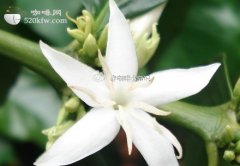
Coffee plants: several to dozens of clusters in leaf axils, the second to fifth flowers on a flower axis. White, fragrant. The middle and small seeds have 5 petals, and the large seeds have 7 - 8 petals. Flowers tubular, terete. The stamen number is many and petal number is same, stamen stigma is bifid, ovary inferior, it is 2 rooms commonly, also have 1 room or 3 rooms. Insect-matched flowers, large-grain seeds and small-grain seeds
Coffee plants
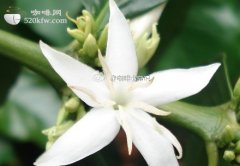
Coffee plants: several to dozens of clusters in leaf axils, the second to fifth flowers on a flower axis. White, fragrant. The middle and small seeds have 5 petals, and the large seeds have 7 - 8 petals. Flowers tubular, terete. The stamen number is many and petal number is same, stamen stigma is bifid, ovary inferior, it is 2 rooms commonly, also have 1 room or 3 rooms. Insect-matched flowers, large-grain seeds and small-grain seeds
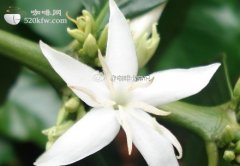
Coffee Plant Articles Fine Coffee Basic Common Sense
Coffee plants: several to dozens of clusters in leaf axils, the second to fifth flowers on a flower axis. White, fragrant. The middle and small seeds have 5 petals, and the large seeds have 7 - 8 petals. Flowers tubular, terete. The stamen number is many and petal number is same, stamen stigma is bifid, ovary inferior, it is 2 rooms commonly, also have 1 room or 3 rooms. Insect-matched flowers, large-grain seeds and small-grain seeds

Characteristics of Ecuadorian coffee beans with state-owned large seed gardens
When Thomas and his crew landed on the island, they frantically searched for water and were so thirsty that they squeezed juice from the fat petals of cacti to drink. Finally found water in a ravine in a rock. Thomas attributed it to God because it was Good Friday and they had celebrated Mass piously before setting out in search of water. But Thomas would never